

Enterprise Systems for Scalable Digital Operations
DGL helps organizations modernize enterprise architecture, scalable system infrastructure, secure cloud platforms, integrated digital operations, and high-performance business ecosystems.
Systems strategy is operating strategy.
Business capability map and technical decision rights.
Cloud, resilience, integration, and release foundations.
ERP, CRM, and internal platforms aligned to work.
AI-supported workflows, approvals, and exceptions.
Trusted data products and performance intelligence.
Create a blueprint that leaders can use, not just architects.
A practical architecture links business capabilities, process ownership, data standards, applications, controls, and cloud choices so modernization has a shared language.
Capabilities, value streams, roles, policies, and service measures.
Platforms, integrations, data domains, security, and environments.
A sequenced enterprise roadmap showing what to standardize, what to retire, what to integrate, and what must remain locally flexible.
Stabilize the core before scaling the edge.
Modern enterprise systems begin with reliable masters, process ownership, service controls, and clear integration boundaries.
Close, controls, procurement, and planning.
Sales, service, account, and experience data.
Shared data, workflows, and controls that every platform can trust.
HR, talent, learning, access, and productivity.
Supply, assets, field, delivery, and service quality.
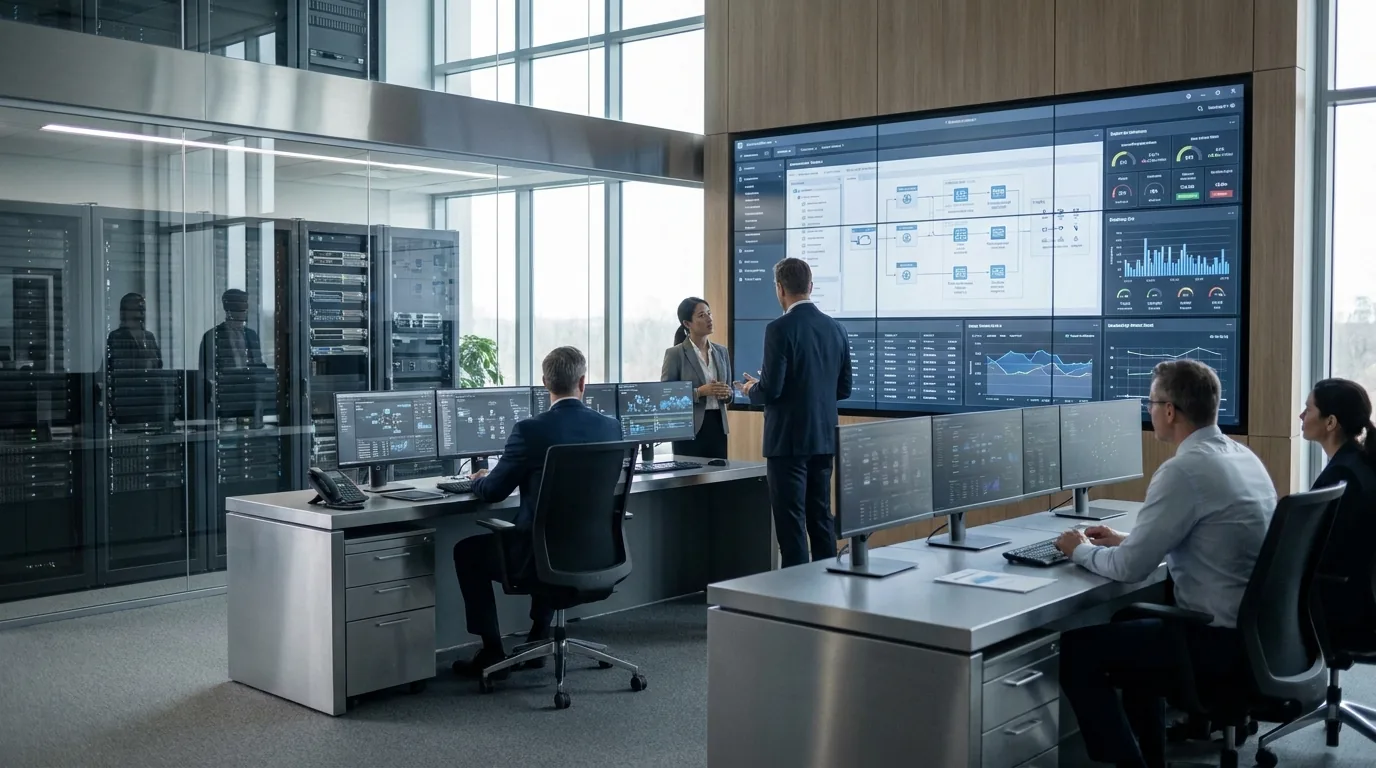
Resilient platforms, governed environments, integration patterns, and release pathways that can scale globally.
Platform landing zones
Secure cloud foundations with identity, network, observability, and cost controls.
Integration fabric
APIs, events, queues, and data exchange that reduce hidden dependencies.
Release velocity
Environment strategy, testing automation, and change windows that support reliable iteration.
Operational resilience
Backup, recovery, monitoring, incident controls, and continuity ownership.
Turn automation into governed operating capacity.
AI belongs inside defined work patterns: triage, recommendations, summaries, approvals, controls, and exception routing.
Capture triggers from cases, orders, tickets, documents, emails, and telemetry.
InputUse AI and business rules to suggest priority, owner, next action, and risk level.
DecisionRoute work, create tasks, draft responses, request approvals, and update records.
FlowLog evidence, maintain human review, measure outcomes, and tune the automation model.
ControlModernize around work, not software labels.
Platform change succeeds when process evidence, role design, data ownership, controls, and adoption are designed together.
| System area | Modernization focus | Enterprise outcome |
|---|---|---|
| ERP | Finance, procurement, assets, project controls, and reporting standards. | Cleaner controls, faster close, better cost visibility. |
| CRM | Customer journeys, service cases, account intelligence, and channel orchestration. | Higher service consistency and revenue visibility. |
| Internal systems | HR, knowledge, collaboration, workflow, and employee service operations. | Less manual effort and better employee experience. |
| Shared services | Intake, approvals, SLA tracking, controls, and continuous improvement. | Scalable support model with measurable service quality. |
Make data move with meaning.
Integration is not just connectivity. It requires shared definitions, ownership, quality rules, and controlled movement across the enterprise.
ERP, CRM, service, finance, product, operations, and workforce platforms.
APIs, event streams, transformation rules, master data, and lineage.
Dashboards, analytics, automation signals, forecasts, and operational alerts.
Build security into the operating system of change.
Enterprise platforms must protect identities, workflows, data movement, vendors, and automation decisions without slowing every team to a halt.
Identity-based controls keep critical platforms aligned to role, risk, and approval rules.
Continuous monitoring highlights exposure across APIs, integrations, vendors, and data flows.
Role design, privileged access, joiner-mover-leaver processes, and review cadence.
Classification, encryption, retention, data sharing, and audit evidence.
Vendor dependencies, compliance evidence, contract controls, and service resilience.
Exceptions, incidents, vulnerabilities, control gaps, and remediation ownership.
Move work through the enterprise with context.
Connect tasks, owners, approvals, handoffs, SLAs, and escalations.
Monitor bottlenecks, rework, cycle time, exceptions, and quality signals.
Use process evidence to redesign rules, roles, automation, and systems.
Keep controls, audit trails, and accountability visible at every stage.
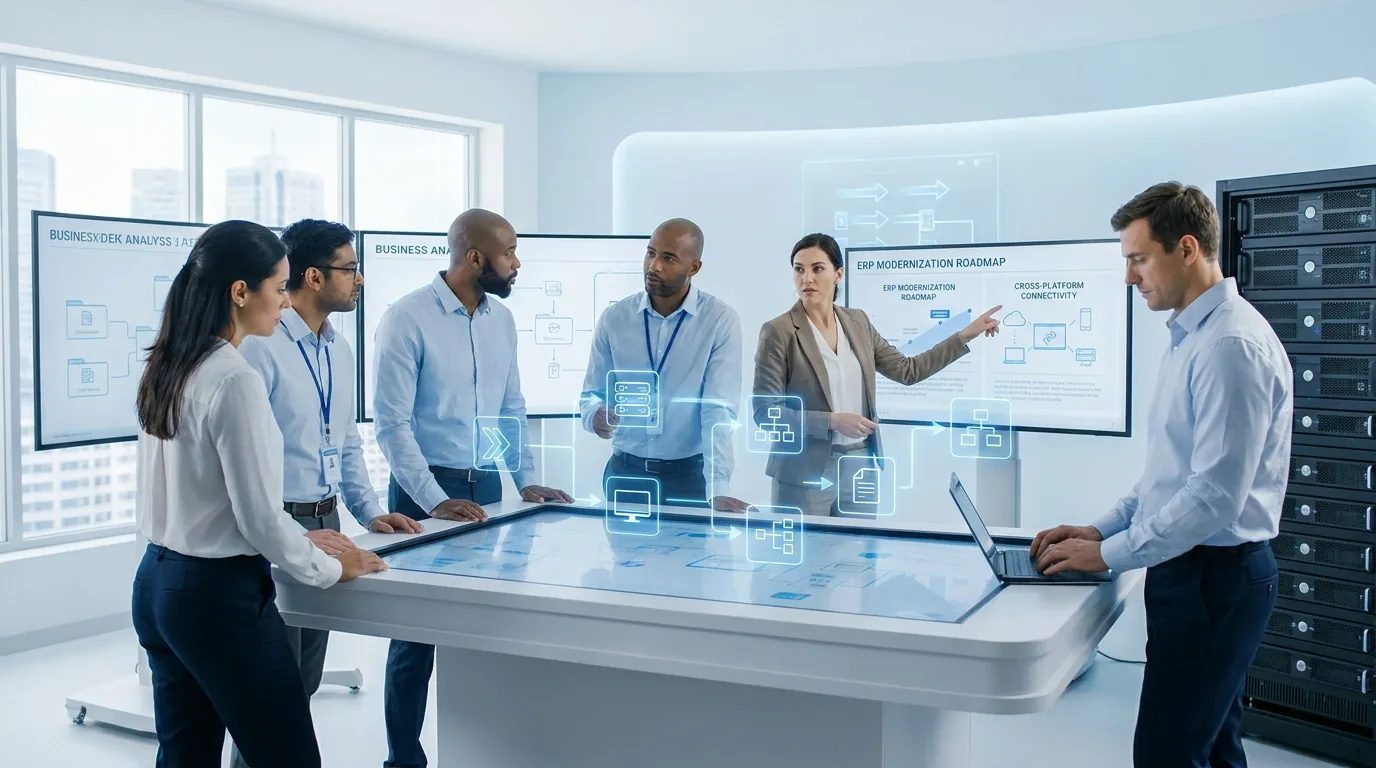
A live view of where enterprise work is moving, waiting, failing, or ready to automate.
Measure modernization by operating change, not go-live noise.
Cycle-time reduction
Shared workflow controls reduced approval loops and made exception ownership visible.
Reporting confidence
Data definitions, lineage, and quality checks improved leadership trust in performance views.
Manual effort removed
Automation moved repetitive validation, routing, and record updates into governed system flows.
The next enterprise stack will be composable, intelligent, and continuously governed.
Organizations will gain advantage by making platforms easier to change, data easier to trust, and workflows easier to automate responsibly.
Capabilities assembled through clear interfaces and reusable services.
Human review paired with AI suggestions, summaries, and decision evidence.
Controls and outcomes monitored inside the operating rhythm.
Turn a complex application estate into a clear enterprise modernization path.
Start with the systems that constrain growth, reporting, service quality, risk, or workforce productivity, then define the architecture decisions needed to move with confidence.